Nature’s Test: How Climate Dictates Stone Durability and Selection
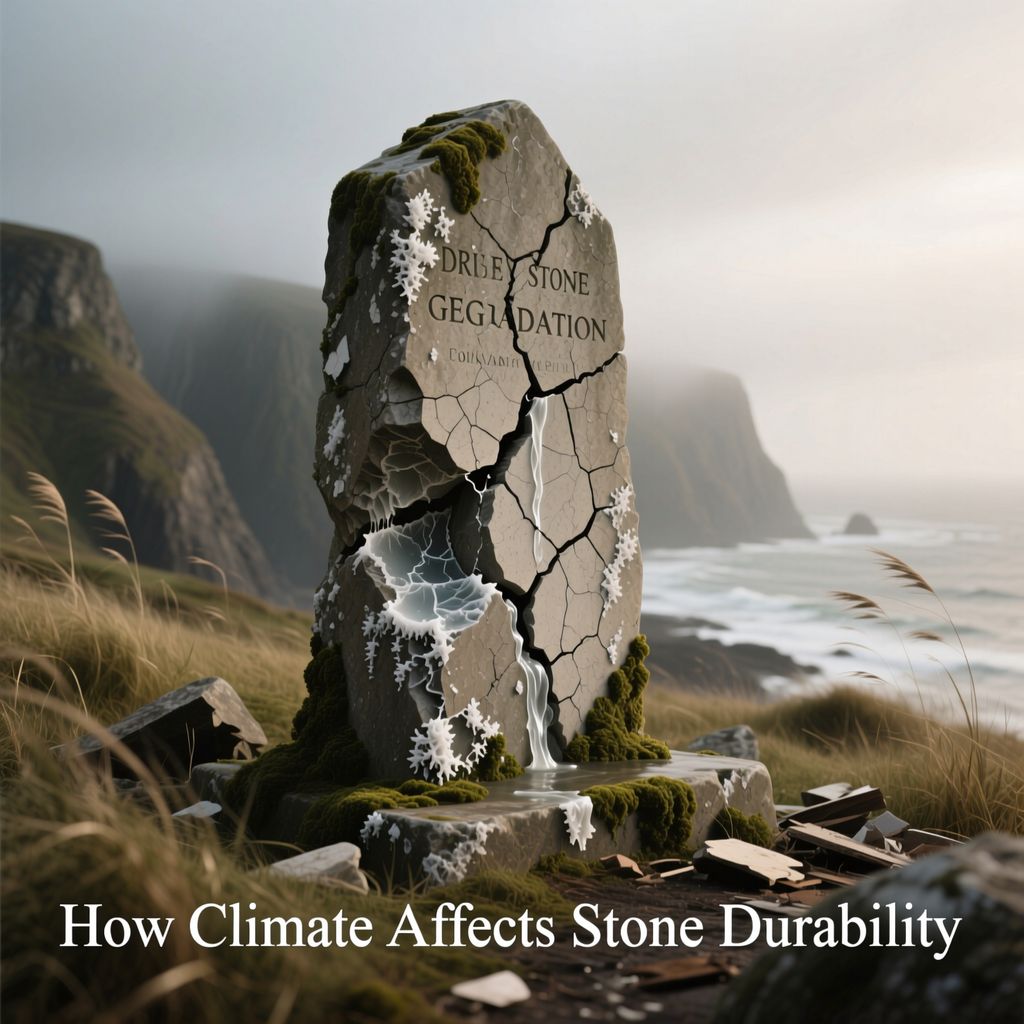
Natural stone is a timeless building material, but its performance is intrinsically linked to the environment it inhabits. A stone that performs beautifully in a dry, hot climate may deteriorate rapidly in a cold, wet one. Understanding how climate affects stone durability is not just a technicality—it’s the key to ensuring your architectural projects stand the test of time and nature.
This guide explores the impact of different climatic conditions on stone and provides expert advice on selection. At IranStoneMarket.com, we don’t just export beautiful Iranian stone; we provide the expertise to ensure it thrives in its final destination.
The Key Climatic Challenges for Natural Stone
Different climates present unique challenges that test the physical properties of stone, primarily its porosity, mineral composition, and strength.
1. Cold & Temperate Climates: The Freeze-Thaw Cycle
This is the single greatest threat to stone in colder regions.
-
The Science: Water from rain or snow seeps into the stone’s pores. When the temperature drops below freezing, this water turns to ice and expands by about 9%. This expansion creates immense internal pressure.
-
The Damage: Repeated freezing and thawing cycles cause the stone to spall (flake), crack, and eventually disintegrate.
-
The Solution: Select stones with very low water absorption (<1%).
-
Recommended Iranian Stone: Iranian Granite is the premier choice. With absorption rates often below 0.1%, its dense structure minimizes water ingress, making it exceptionally durable for exterior cladding, paving, and pool coping in cold climates.
2. Coastal & Arid Climates: Salt Crystallization
This affects both sunny coastal areas and deserts.
-
The Science: Water containing dissolved salts (from sea spray or groundwater) is drawn into the stone. As the water evaporates, the salts are left behind and crystallize. These growing crystals exert pressure similar to ice, forcing the stone apart from within.
-
The Damage: Surface pitting, powdering (efflorescence), and scaling.
-
The Solution: Again, low porosity is critical. Dense stones that resist salt-laden moisture penetration will last far longer.
-
Recommended Iranian Stone: Dense Granite and certain low-porosity marbles that have been properly sealed and maintained are excellent for coastal applications, resisting the corrosive effects of salt.
3. Hot & Humid Climates: Moisture and Biological Growth
High rainfall, humidity, and heat create a unique set of challenges.
-
The Science: Constant moisture allows water to penetrate more porous stones. This, combined with organic matter, creates a fertile environment for algae, mold, lichen, and moss to grow.
-
The Damage: Green or black discoloration, surface staining, and a slippery, unsafe surface. The acids produced by some organisms can also etch the surface of calcareous stones like marble.
-
The Solution: Choose stones that are less porous or have a textured, non-slip finish. Regular cleaning is essential.
-
Recommended Iranian Stone: Flamed or Bush-Hammered Granite provides an excellent non-slip surface for pool decks and outdoor walkways. For interiors, polished granite and low-porosity marble perform well if maintained with a proper sealant.
4. Hot & Dry (Desert) Climates: Thermal Shock and Sand Abrasion
Intense heat, UV radiation, and wind-blown sand are the main concerns.
-
The Science:
-
Thermal Shock: Rapid temperature changes between scorching days and cool nights can cause expansion and contraction, leading to stress in the stone over time.
-
Abrasion: Wind-driven sand acts like sandpaper, slowly wearing away the stone’s surface, particularly affecting softer stones.
-
-
The Damage: Fading of color from UV exposure, surface erosion, and potential micro-cracking.
-
The Solution: Select hard, durable stones with high abrasion resistance and stable mineral structures.
-
Recommended Iranian Stone: Iranian Granite is ideal due to its hardness, UV stability (colors won’t fade), and excellent abrasion resistance.
A Simple Climate-Based Stone Selection Guide
| Climate Type | Primary Threat | Recommended Stone Type | Application Tips |
|---|---|---|---|
| Cold / Temperate | Freeze-Thaw | Iranian Granite | Ensure proper slope for drainage. |
| Coastal | Salt Crystallization | Dense Granite, Low-Porosity Marble | Rinse regularly with fresh water. |
| Hot & Humid | Biological Growth | Textured Granite (Flamed) | Allow for good airflow; clean regularly. |
| Hot & Dry | Thermal Shock, Abrasion | Abrasion-Resistant Granite | Lighter colors may reflect more heat. |
The Universal Factor: Water Absorption
As you can see, water in its various forms (ice, saltwater, humidity) is the common enemy. Therefore, the stone’s water absorption rate is the most critical technical specification to check against your local climate.
IranStoneMarket.com: Your Partner in Climate-Resilient Design
We go beyond simply selling stone. We provide the knowledge and products to ensure your project’s longevity.
-
Climate-Informed Recommendations: We advise on the best Iranian granite or marble for your specific climatic conditions, ensuring performance matches beauty.
-
Technical Data: We provide essential technical data, including water absorption, compressive strength, and abrasion resistance values, so you can make an informed decision.
-
Proven Performance: The diverse geology of Iran produces stones that are tested by nature, offering proven durability for global applications.
Build with Confidence, Whatever the Weather
Choosing the right stone for your climate is an investment in the future of your project. It prevents premature deterioration, reduces maintenance costs, and preserves aesthetic value for decades.
Don’t let the climate compromise your vision.
Consult with the experts at IranStoneMarket.com. Contact us today with your project location and requirements, and we will recommend the perfect, climate-resilient Iranian stone for your needs.
[Get a Climate-Specific Stone Recommendation from IranStoneMarket.com!]