A Buyer’s Guide: Common Defects in Marble and How to Spot Them
Marble is a gift from nature, and like all natural products, it can have unique characteristics and imperfections. For importers, designers, and fabricators, knowing the common defects in marble and how to spot them is essential for making informed purchasing decisions and setting realistic expectations.
Some features are part of the stone’s natural charm, while others can compromise its structural integrity or aesthetic value. This guide will empower you to identify these issues. At IranStoneMarket.com, we believe in full transparency and rigorously inspect our Iranian marble to ensure you receive only the highest quality material.
Natural Characteristics vs. Defects: Understanding the Difference
First, it’s crucial to distinguish between inherent natural features and genuine defects.
-
Natural Features: Veining, color variation, and pitting are part of marble’s story and do not affect its structural strength.
-
Defects: Cracks, deep fissures, and manufacturing flaws can weaken the stone or lead to premature failure.
Common Defects in Marble and How to Identify Them
Here are the most common issues to look for when inspecting marble slabs.
1. Fissures vs. Cracks
This is the most important distinction for any marble buyer.
-
Fissures (Natural Feature):
-
What it is: A natural, shallow separation within the stone, often filled with crystalline material. It is a geological formation, not a result of damage.
-
How to Spot It: It looks like a thin, often discontinuous line. You typically cannot feel it with your fingernail. It does not affect the stone’s structural integrity.
-
Should you be concerned? No. Fissures are characteristic of many marble types and are generally accepted.
-
-
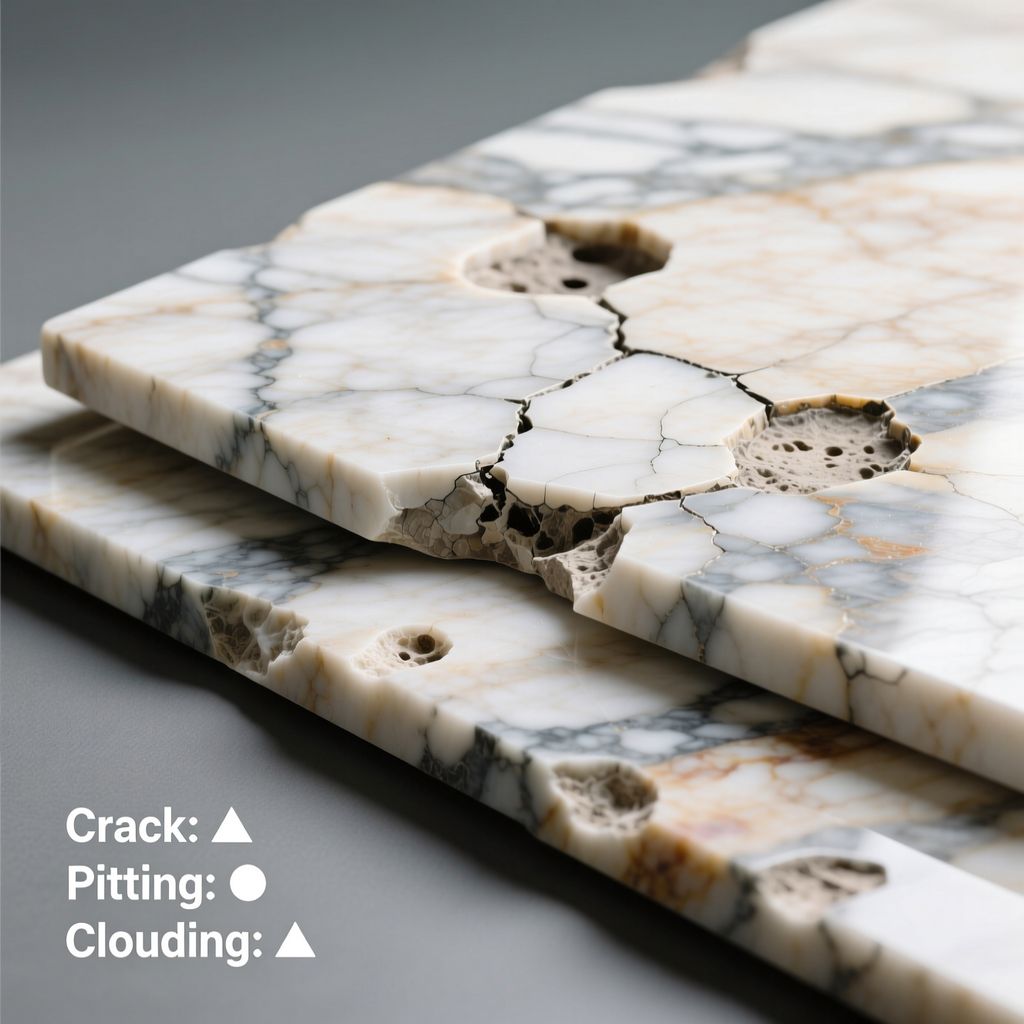
Cracks (Defect):
-
What it is: A man-made break in the stone, usually caused by stress during quarrying, transportation, or handling.
-
How to Spot It: A crack is often sharper and more defined. You can feel it with your fingernail. It may have a different color at the break and can compromise the slab’s strength.
-
Should you be concerned? Yes. Cracks can propagate and lead to the slab breaking during fabrication or installation.
-
2. Stains and Discoloration
-
What it is: Unwanted patches of color caused by foreign substances like oil, rust, or organic matter.
-
How to Spot It: Look for isolated yellow, brown, or orange patches that don’t align with the stone’s natural veining. Rub the area with a clean, damp cloth; if color transfers, it might be a surface-level stain.
-
Should you be concerned? Potentially. Surface stains can sometimes be removed, but deep-set discoloration is often permanent.
3. Pitting
-
What it is: Small, natural pinprick holes on the surface, which are the result of softer minerals eroding away during the polishing process.
-
How to Spot It: View the slab at an angle under bright light. You will see tiny, non-reflective spots. This is very common in marbles like Carrara.
-
Should you be concerned? Generally, no. Pitting is a natural characteristic. However, excessive pitting might not be desirable for a perfectly smooth aesthetic.
4. Resin Overuse or Mismatch
-
What it is: To strengthen the slab, manufacturers use epoxy resin to fill natural fissures and cracks. A defect occurs when this resin is overused, poorly matched, or applied incorrectly.
-
How to Spot It:
-
Color Mismatch: The resin is a noticeably different color than the surrounding stone, creating visible “scars.”
-
Cloudy Patches: The resin was not properly cured or polished, leaving a hazy, non-reflective area.
-
Feel the Surface: Run your hand over the slab. The resin-filled areas should be perfectly smooth and flush with the surface. If you can feel a bump or a dip, it’s a poor repair.
-
-
Should you be concerned? Yes. Poor resin work is an aesthetic defect that can be very noticeable after installation.
5. Soft Spots and Voids
-
What it is: Areas where the stone’s composition is less dense or where there is a cavity.
-
How to Spot It: Tap lightly on the surface of the slab with a small metal object. A clear, ringing sound indicates solid stone. A dull, hollow thud indicates a soft spot or void.
-
Should you be concerned? Yes. These areas are weak points that can break easily during fabrication or under stress.
Your Pre-Purchase Inspection Checklist
When evaluating marble slabs, follow these steps:
-
Visual Inspection: Examine the slab under bright, direct light from multiple angles.
-
The Fingernail Test: Run your fingernail along any lines to check for cracks.
-
The Tap Test: Gently tap across the surface to listen for hollow sounds.
-
The Touch Test: Feel the entire surface for smoothness, checking resin fills.
-
The Water Test: (For stain suspicion) Place a few drops of water to see if it darkens one area more than others, indicating varying porosity.
How IranStoneMarket.com Minimizes Defects for You
We understand that your reputation depends on the quality of the stone you use. That’s why our process is designed to identify and address defects before shipment.
-
Rigorous Grading: We grade our marble into commercial, standard, and premium categories based on the presence of natural characteristics and any defects.
-
Expert Resin Treatment: We use high-quality, color-matched resins and skilled craftsmen to perform repairs that are virtually invisible.
-
Pre-Shipment Inspection: Every slab is thoroughly inspected before crating. We can provide photos and videos of your actual slabs for your final approval.
-
Transparent Communication: We clearly communicate the natural characteristics of each marble variety we sell, so you know exactly what to expect.
Partner with a Transparent Supplier
Knowing the common defects in marble and how to spot them is your first line of defense. The second is choosing a supplier who is as committed to quality as you are.
Don’t let hidden defects compromise your project.
Choose IranStoneMarket.com for marble that has been vetted for quality and integrity. Contact us today to discuss your needs and request inspection reports for our available slabs.
[Request Pre-Shipment Slab Photos & Inspection Reports from IranStoneMarket.com!]