
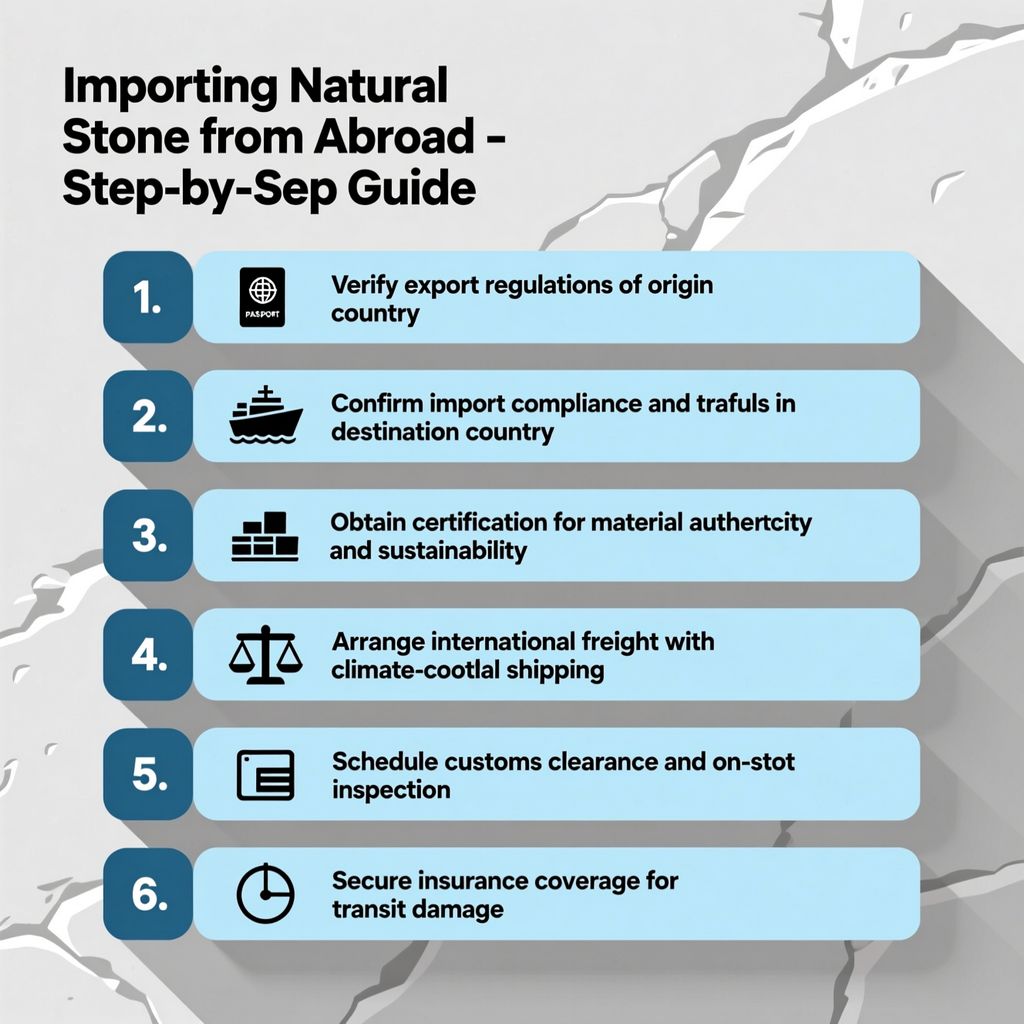
The Ultimate Checklist for Importing Natural Stone from Abroad
Importing natural stone is a significant investment that can elevate your projects and boost your profitability. However, navigating international logistics, supplier vetting, and customs can be complex. A simple oversight can lead to costly delays, damaged goods, or unexpected expenses.
This comprehensive Checklist for Importing Natural Stone from Abroad is your essential guide to a seamless and successful experience. Whether you’re a seasoned importer or new to the global stone trade, use this list to mitigate risks and ensure a smooth transaction from quarry to your project site.
Phase 1: Pre-Order Preparation & Supplier Vetting
☑ Define Your Project Requirements
-
Stone Type: Marble, Granite, Travertine, Onyx, etc.
-
Quantity: In square meters, cubic meters (for blocks), or specific number of slabs.
-
Dimensions & Thickness: Specify slab sizes (e.g., jumbo slabs), tile formats, or block sizes.
-
Finish: Polished, Honed, Brushed, Tumbled, etc.
-
Quality Grade: Agree on the acceptable level of fissures, color variation, and consistency.
☑ Identify & Vet Potential Suppliers
-
Check Credentials: Verify business licenses, company history, and membership in trade associations.
-
Review Portfolio: Examine their project gallery and product range.
-
Read Client Testimonials: Look for reviews or ask for references from other international clients.
-
Assess Communication: A reliable supplier (like IranStoneMarket.com) is responsive, professional, and transparent from the first contact.
Phase 2: Quotation, Sampling & Contract
☑ Request and Compare Proforma Invoices (PI)
-
Ensure the PI is detailed: Includes product description, price, total amount, and Incoterms (e.g., FOB, CIF).
-
Clarify Payment Terms: Understand the advance percentage (e.g., 30%) and balance payment terms.
☑ Order and Evaluate Physical Samples
-
Never skip this step. Request samples of the exact stone for your project.
-
Check for: Color, veining, finish quality, and overall consistency with your expectations.
☑ Conduct a Pre-Shipment Inspection (If Possible)
-
For large orders, visit the supplier’s yard or quarry to select and tag specific blocks or slabs. IranStoneMarket.com facilitates and encourages this for our partners.
☑ Review and Sign the Sales Contract
-
The contract should protect both parties and clearly state: product specifications, quality standards, packaging, delivery timeline, and dispute resolution terms.
Phase 3: Production, Logistics & Shipping
☑ Confirm Production Schedule
-
Stay in contact with your supplier for updates on block cutting, slab production, and packing.
☑ Verify Packaging Specifications
-
Blocks: Must be securely packed in steel-framed wooden crates.
-
Slabs: Should be packed on A-frame wooden pallets, properly strapped and protected with corner guards.
-
Tiles: Should be in strong, palletized boxes.
☑ Arrange Logistics and Insurance
-
Hire a Freight Forwarder: Choose one with experience in shipping dimensional and heavy cargo.
-
Confirm Shipping Details: Based on your Incoterms, book sea or air freight.
-
Purchase Marine Insurance: Essential to cover any potential damage or loss during transit.
☑ Prepare for Customs Clearance
-
Identify Import Duties: Research the HS (Harmonized System) code for natural stone in your country to calculate import duties and taxes.
-
Hire a Customs Broker: They will handle the complex paperwork on your behalf.
Phase 4: Key Documentation (The “Documentation Checklist”)
Your supplier must provide you with the following documents. Ensure you have them all before the shipment arrives:
☑ Commercial Invoice
☑ Packing List
☑ Bill of Lading (or Air Waybill)
☑ Certificate of Origin
☑ Pre-Shipment Inspection Report (if applicable)
☑ Phytosanitary Certificate (required by some countries)
☑ Radioactivity Test Report (often required for European and other markets)
Phase 5: Destination & Post-Delivery
☑ Track Your Shipment
-
Use the Bill of Lading number to track your container’s voyage.
☑ Coordinate with Your Customs Broker
-
Provide them with all the necessary documents for a smooth clearance process.
☑ Arrange Port Pickup and Inland Transportation
-
Hire a trucker with the right equipment (e.g., a forklift or Moffett) to handle heavy stone pallets.
☑ Conduct a Meticulous Unloading and Inspection
-
Inspect upon arrival: Check for any visible damage to containers or packaging.
-
Inspect every piece: Unload and inspect each slab or crate for breakage, chipping, or other transit damage before the driver leaves.
-
Document any issues: Take photos and file a claim with the insurance company immediately if damage is found.
Your Trusted Partner in Stone Importing
While this checklist covers the universal steps, having a reliable supplier simplifies every single one. IranStoneMarket.com acts as your expert partner on the ground in Iran.
We ensure:
-
Total Transparency in pricing and product quality.
-
Professional Packaging to minimize transit risks.
-
Accurate and Complete Documentation for hassle-free customs clearance.
-
Continuous Communication from the first inquiry to the final delivery.
Download a PDF version of this checklist and keep it handy for your next import project.
[Download the Checklist & Contact IranStoneMarket.com for a Seamless Import Experience!]